Stain Removal for Car Interiors: What Actually Works | Foust Auto Detail – Dallas, GA
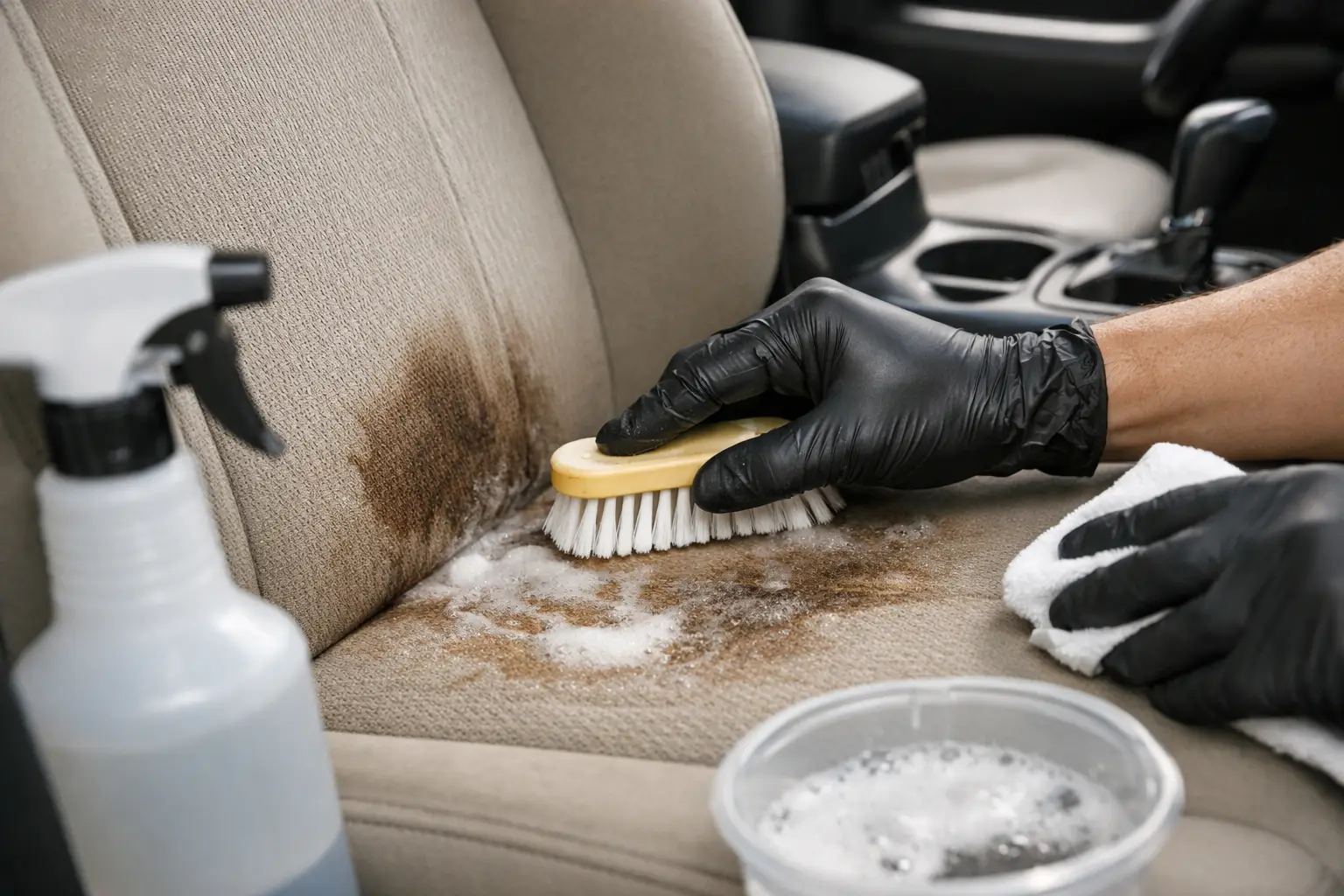
Coffee in the cupholder, sports drink in the second row, dog paw prints on the seat edge, and a mystery spot near the console - that is usually how stain removal car interior work begins. Most interior stains are not ruined-forever problems. They become expensive problems when the wrong cleaner, too much water, or aggressive scrubbing drives the stain deeper or damages the material around it.
For most vehicle owners, the goal is not just to make the mark look lighter for a week. The goal is to remove as much of the stain as safely possible, leave the material stable, and avoid creating a larger issue like fabric distortion, discoloration, odor, or mildew. That is where method matters.
Stain removal car interior starts with identification
The first question is simple: what caused the stain, and what surface is it on? The answer changes everything. A protein-based stain like milk, blood, or pet accident behaves differently than coffee, grease, makeup, ink, or red clay. The seat fabric in a family SUV also reacts differently than coated leather in a luxury sedan or the tighter weave found in many newer vehicles.
This is where many do-it-yourself attempts go sideways. People often choose a cleaner based on what they already have under the sink instead of what the stain and material actually require. That can work on a light, fresh spill. It is much less reliable on older stains, heavily used interiors, or sensitive surfaces.
A good process usually starts with dry removal first. Loose debris, grit, and dried residue should be vacuumed or lifted before any liquid cleaner touches the area. If that step gets skipped, you are often turning dirt into muddy slurry and pushing it into the fibers.
Why some interior stains keep coming back
A stain can look gone when it is still sitting below the surface. This is especially common in seat foam and carpet padding. The top layer dries, the vehicle heats up in the sun, and the residue wicks back upward. What looked clean on Tuesday is visible again by Friday.
That is why over-wetting is one of the biggest mistakes in interior work. More product does not mean more cleaning power. In many cases, it only means longer dry time, more residue, and a higher chance of odor. Safe stain removal is controlled cleaning, not saturation.
There is also a difference between a stain and permanent damage. Dye transfer from denim, bleach marks, chemical burns, and worn-through fibers can all resemble staining. Some of those issues can be improved, but not fully removed, because the material itself has changed. Honest expectations matter.
How to approach fabric seat stains
Fabric seats are common, and they can respond well when treated properly. The key is to blot, not scrub aggressively. Hard scrubbing can fray the fibers and spread the stain beyond its original edge.
For fresh spills, absorb first. A clean microfiber towel or absorbent cloth should be pressed into the area to lift liquid out before any cleaner is introduced. After that, a fabric-safe interior cleaner can be worked in gently with a soft brush or towel, depending on the material. Light agitation helps break the bond without roughing up the seat.
Extraction or controlled towel removal is often what makes the difference. If loosened residue is not actually removed, it stays in the material. That is why quick spray-and-wipe methods can leave seats looking better for a day but not truly cleaner.
Older stains are less predictable. Coffee, soda, and juice often leave behind both color and sugar residue. That means the area may need more than one treatment to fully correct. If milk, pet accidents, or food spills soaked into the lower layers, odor treatment becomes part of the job too, not just surface cleaning.
Carpet and floor mat stain removal car interior challenges
Carpet takes more abuse than almost any other interior surface. It catches road salt, mud, grease, food, moisture, and whatever ends up on shoes after a Georgia rainstorm. Floor mats can sometimes be treated more aggressively because they are removable and easier to dry. Installed carpet needs more restraint.
The biggest issue with carpet is depth. What you see on the surface is often only part of the problem. If the spill reached the underlayment, the visible stain may be tied to contamination below. That is why some carpet stains reappear and some odors linger even after repeated cleaning.
Mud and clay should be allowed to dry when possible, then vacuumed thoroughly before wet cleaning. Grease needs a different approach than sports drinks or coffee. Salt rings and water marks can require repeated leveling rather than one heavy pass. There is no single cleaner that handles every carpet issue equally well.
When floor mats are heavily stained, it often makes sense to restore them separately while keeping moisture away from the vehicle cabin as much as possible. Faster drying is not just a convenience issue. It helps prevent musty smells and reduces the chance of hidden moisture staying behind.
Leather, vinyl, and coated surfaces need a lighter hand
Many people assume leather is tougher than fabric. In some ways it is, but it is also easier to permanently alter with the wrong chemistry. Most modern automotive leather has a protective coating, which means heavy degreasers, household stain removers, and abrasive brushes can strip or dull the finish before they remove the stain.
A safe interior leather process uses measured cleaning, soft tools, and minimal moisture. Body oils, dye transfer, sunscreen residue, and food spots are all common. Some can be cleaned fully. Others, especially color transfer on lighter seats, may only improve to a point.
Vinyl and plastic trim bring their own risks. Shiny spots, faded patches, and uneven appearance often come from using products that are too harsh or too glossy. The right result is a clean, even, factory-appropriate finish, not a slick surface that attracts more dust.
Stains that usually need more than a quick home fix
Some interior stains are straightforward. Others deserve a more careful response from the beginning. Ink, lipstick, grease, pet accidents, vomit, spilled protein drinks, and unknown old stains all fall into that second group.
Ink can spread quickly and set fast. Pet accidents often involve both staining and odor deep in the padding. Protein-based spills can sour in warm weather, especially if the vehicle sits closed up during the day. In those cases, cleaning the visible area alone is rarely enough.
If the stain has been treated multiple times with different products, that complicates things too. Residue from retail cleaners can lock in soil, create stiffness, or interfere with proper extraction. Sometimes the technician is not just removing the original stain. They are also correcting the result of several well-intentioned attempts.
What professional interior stain removal does differently
Professional results usually come down to three things: correct identification, safe product selection, and controlled removal. That sounds simple, but it takes judgment. Not every stain should be attacked the same way, and not every vehicle should be cleaned with the same level of moisture or agitation.
A methodical interior detailer will assess the material, the likely source, the stain age, and whether there is any sign of permanent damage. From there, the process can be adjusted. Some areas need spot treatment. Others need broader cleaning to avoid creating a noticeably cleaner patch around the original stain.
This is especially valuable for busy households, pet owners, and drivers who use their vehicles daily and cannot afford a trial-and-error process. In neighborhoods around Dallas, Georgia, where family SUVs, trucks, and luxury vehicles often serve multiple roles in one week, convenience matters. So does knowing the person working on the vehicle is using safe techniques and setting honest expectations.
Foust Auto Detail approaches interior recovery the same way a careful craftsman would - clear process, measured methods, and no gimmicky promises about every stain disappearing completely.
When removal is realistic and when improvement is the win
The best outcome is complete removal, but that is not always the honest promise. Some stains can be fully corrected. Others can be substantially improved without risking damage. The right choice depends on material sensitivity, stain age, prior attempts, and whether the mark is truly contamination or actual surface change.
That is why restraint matters in quality detailing. Chasing the last 10 percent of a stain with aggressive chemistry can turn a small issue into permanent damage. A professional should know when to stop, when to reset expectations, and when preserving the material is more important than forcing a result.
If you are dealing with a fresh spill, act early, blot carefully, and avoid flooding the area with random cleaners. If the stain is old, spreading, odorous, or tied to delicate materials, a careful professional approach usually saves time and avoids collateral damage. The best interior work does not just make a vehicle look cleaner for the afternoon. It leaves it healthier, more stable, and easier to maintain the next time life happens in the front seat or the third row.