Interior Car Detailing for Pet Hair | Foust Auto Detail – Dallas, GA
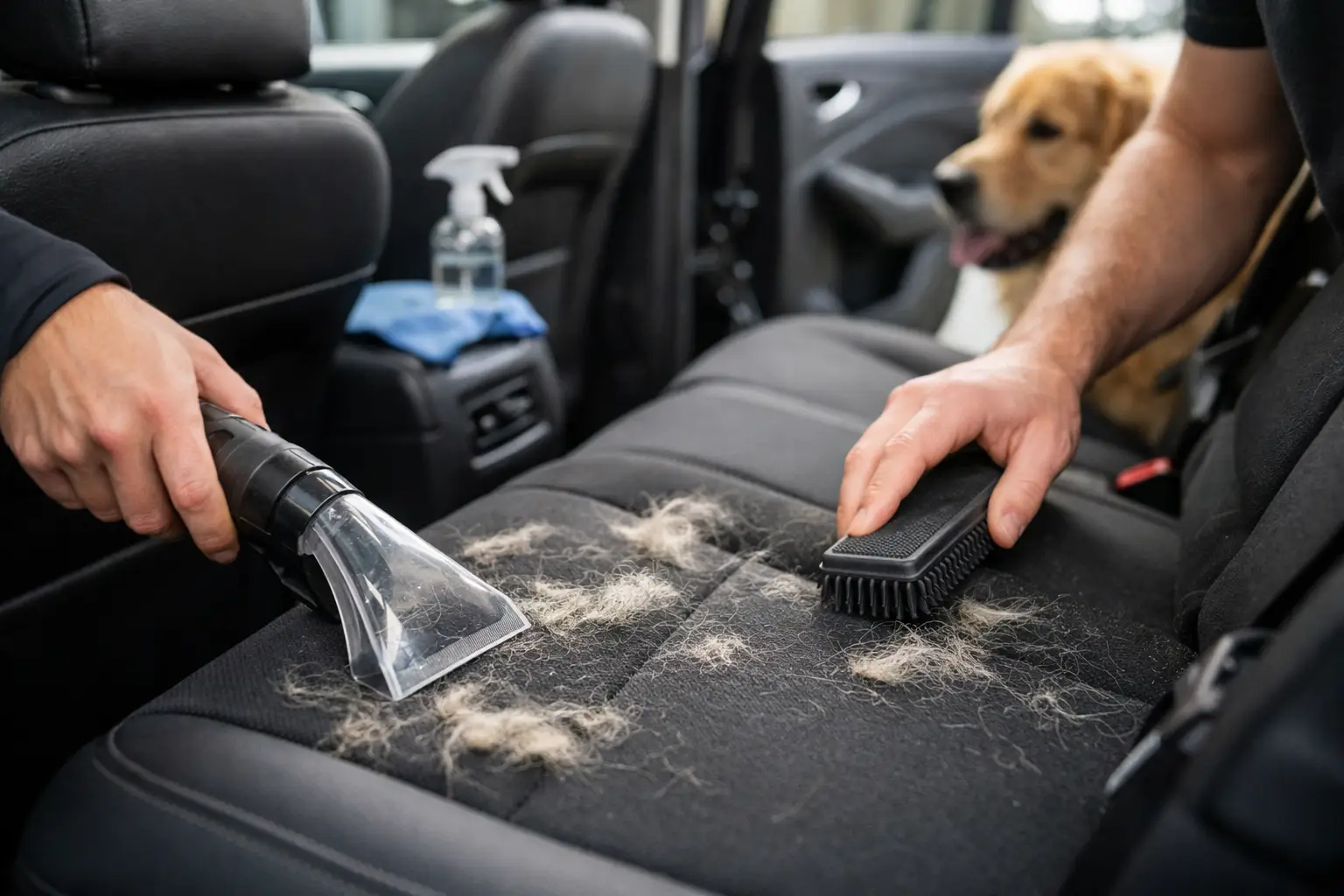
Dog hair has a way of turning a clean vehicle into a constant losing battle. It threads itself into carpet, clings to seat fabric, hides in seams, and somehow keeps showing up even after a quick vacuum. That is why interior car detailing for pet hair is rarely just a basic cleanup. Done properly, it is a methodical process that removes embedded fur, addresses odor, and restores the cabin to a level that actually feels clean again.
For pet owners, the challenge is not just volume. It is how differently hair behaves depending on the interior material, the breed, the season, and how often the vehicle carries animals. A short-haired dog can leave thousands of stiff little strands packed into upholstery. A long-haired breed can coat every surface in soft fur that shifts with airflow and settles into corners. The right approach depends on what the hair is attached to and how long it has been there.
Why pet hair is harder than ordinary interior debris
Crumbs, dust, and loose dirt usually sit on the surface. Pet hair does not. It creates friction against carpet and cloth seats, and that friction is exactly what makes removal time-consuming. Some fibers can be lifted with airflow and suction. Others need agitation. Others still need repeated passes from different directions before they release.
This is where many rushed cleanings fall short. A vacuum alone may improve the appearance, but it often leaves behind the hair that is most visible in daylight or most noticeable when someone gets into the vehicle wearing dark clothing. For families who drive kids to school, carry pets to the vet, or use one SUV for everything, that partial result usually does not last long.
Interior car detailing for pet hair starts with the surface type
The interior material matters more than most people expect. Rubber floor mats are straightforward. Carpeted floorboards and cargo areas are not. Leather seats tend to release hair more easily than cloth, but hair can still pack tightly into seat edges, stitching, and under-seat hardware. Cloth seats are often the most labor-intensive because strands weave into the fabric and resist suction.
The cargo area is another common trouble spot. Many pet owners focus on seats and overlook the rear compartment where dogs ride most often. That section usually collects the highest concentration of fur, dander, paw dirt, and odor. If the goal is a true reset, that area needs the same level of attention as the passenger cabin.
What a proper pet hair removal process usually includes
A real interior detail for pet hair is built in layers. First comes dry debris removal so loose dirt is not ground deeper into the surfaces. Then the hair itself is worked loose with specialized tools such as rubber brushes, detailing brushes, compressed air, or pet-hair-specific extraction tools. After that, vacuuming becomes far more effective because the hair has been lifted instead of simply dragged across the surface.
Once the visible hair is addressed, the detail should move into seams, tracks, under-seat areas, and tight trim edges. These are the places where leftover fur collects and then reappears a few days later. If there is odor involved, surface cleaning alone is not enough. The fabric, carpet, and any porous material may need deeper treatment to remove the source, not just mask it.
What works best and what usually wastes time
There is no single miracle tool for every vehicle. That is the honest answer. Some interiors respond well to rubber pet hair brushes. Others release better with air tools and controlled agitation. On delicate materials, aggressive scraping can do more harm than good. The safest process is usually the slower one.
Lint rollers can help on small areas, especially for fresh hair on smoother seats, but they are not efficient for full-vehicle cleanup. Household vacuum attachments often help with loose fur but struggle with embedded hair. Fabric softener sprays are sometimes suggested online, but oversaturating seats or carpet can create residue problems and attract more dirt later. The goal is not just removal today. It is a clean interior that stays presentable.
That trade-off matters. Fast methods may look decent for an hour. Careful methods produce a more complete result and are less likely to leave behind damage, sticky residue, or damp fabric.
When pet hair becomes a deeper interior issue
Sometimes the vehicle does not just have hair. It has a buildup problem. That usually shows up when pet fur is mixed with body oils, dust, sand, moisture, and odor. At that point, the interior can feel dull or gritty even if the hair count has been reduced.
This is where deeper interior cleaning becomes worth it. Seats may need a more thorough fabric or leather treatment. Carpets may need extraction or targeted cleaning. Plastic panels and door cards often collect a fine layer of fur and dander that basic wiping misses. If a pet rides in the vehicle daily, especially after walks, park visits, or rainy outings, this level of cleaning can make the biggest difference in how the cabin feels afterward.
Odor is usually tied to what you cannot see
Pet odor does not always come from the animal itself. It often comes from the material left behind - dander, saliva, oils, tracked-in moisture, and hair holding onto all of it. If a car smells like dog even after visible fur has been removed, the issue is usually in the fabric and carpet, not the air.
That is why a quality interior detail treats odor as part of the same problem. Deodorizing without cleaning the source is temporary. For some vehicles, especially family SUVs and daily drivers, this is the difference between a car that looks better and one that genuinely feels refreshed.
How often pet owners should schedule interior car detailing for pet hair
It depends on how the vehicle is used. A dog that rides once a month creates a very different situation than two shedding pets riding several times a week. For occasional pet transport, a deeper pet hair detail a few times a year may be enough, with light upkeep in between. For regular pet travel, especially in larger family vehicles, a maintenance schedule usually makes more sense.
That is often the smartest route for busy households. Once hair becomes heavily embedded, removal takes longer and the result is more labor-intensive to achieve. Regular interior maintenance keeps the problem manageable and protects the condition of the cabin over time.
For clients in Dallas, Georgia and nearby neighborhoods, mobile service can be especially practical here. A pet-heavy interior detail takes time, and having it handled at home or at work is often easier than rearranging the day around a shop visit.
What to do between details
The best upkeep is simple and consistent. Use a seat cover or cargo liner if pets ride often. Brush out high-hair areas before it gets compacted. Vacuum lightly between deeper visits instead of waiting until the interior is overloaded. If your pet gets wet, muddy, or sandy, dry and wipe down the riding area sooner rather than later.
It also helps to be realistic. If your dog is in the vehicle every week, some level of recurring hair is normal. The goal is not perfection every day. The goal is keeping buildup from reaching the point where the interior always looks and smells one step behind.
Choosing the right level of service
Not every pet-hair situation needs the same package. A light cleanup for a vehicle with leather seats and occasional shedding is different from a deep interior recovery on a cloth-seated SUV that carries pets, kids, snacks, and sports gear. Clear service descriptions matter here. You should know whether the package is designed for maintenance-level cleanup or for heavier restoration work.
That is one reason owner-operated detailers tend to be a good fit for this kind of work. There is usually more direct communication about condition, time required, and what result is realistic. A heavily fur-packed interior can be improved dramatically, but honest expectations are part of quality service.
Foust Auto Detail approaches this kind of work the way it should be handled - carefully, safely, and without shortcuts that trade speed for quality. For pet owners, that matters more than flashy promises.
A vehicle that carries pets does not have to feel permanently covered in fur. With the right process and the right maintenance rhythm, it can stay clean, comfortable, and ready for daily life without becoming a constant weekend project.