Car Detailing for Kids' Messes | Foust Auto Detail – Dallas, GA
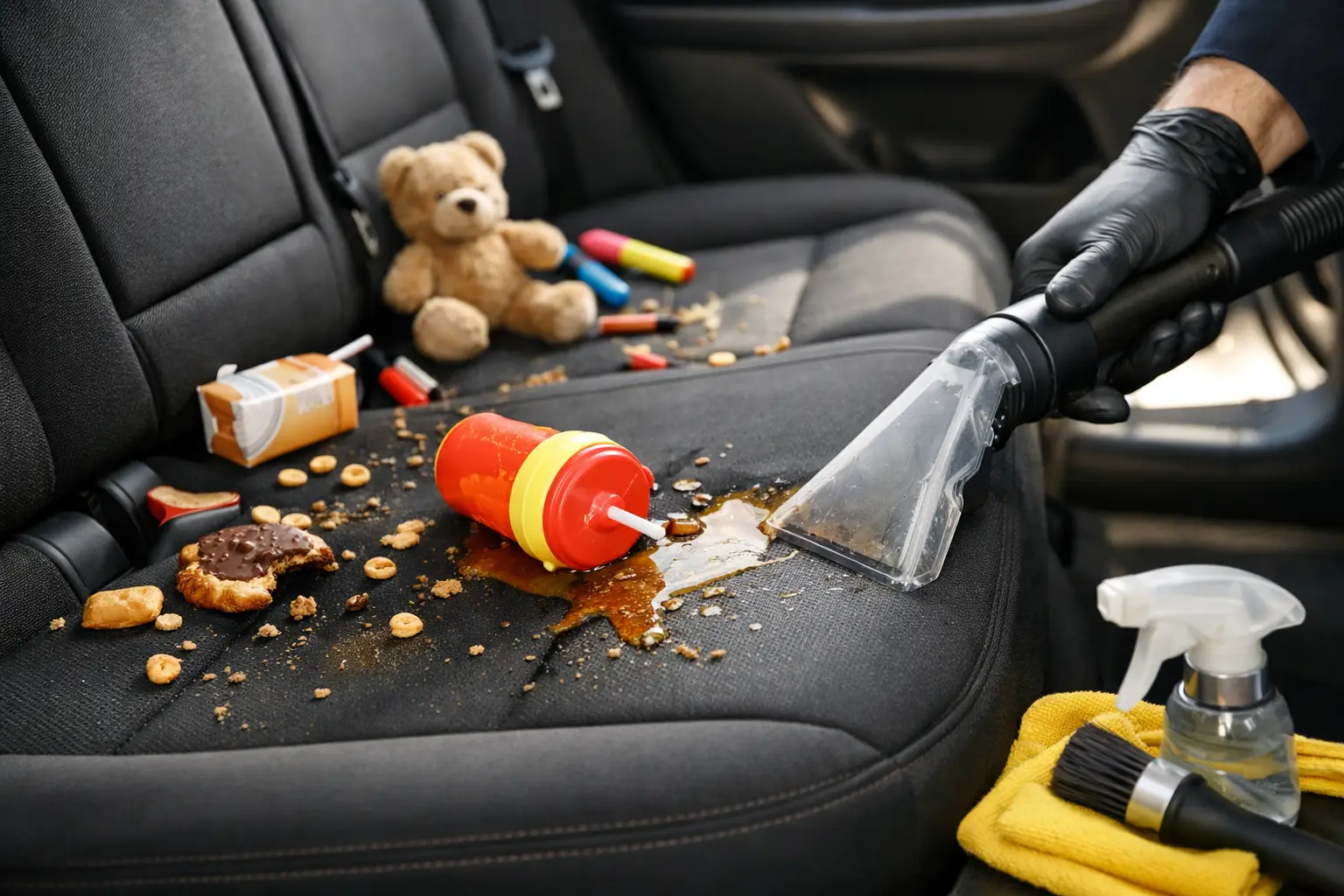
A snack cup tips over once and it feels manageable. A week later, there are crushed crackers in the seat tracks, a milk smell you cannot quite place, sticky fingerprints on every panel, and a mystery stain spreading under the booster seat. That is usually when car detailing for kids mess stops being a quick cleanup and starts requiring a more methodical approach.
For families, the interior takes a different kind of wear than most vehicles. It is not just dirt. It is layered contamination - food oils, sugar residue, drink spills, sunscreen, mud, craft debris, and the fine grit that gets ground into carpet and fabric every time kids climb in and out. Cleaning that properly is less about speed and more about using the right process on the right surface.
Why kids' messes are harder than they look
A family vehicle can look only mildly dirty at first glance and still need significant interior work. Crumbs settle below what a standard vacuum can reach. Juice dries clear and leaves a tacky film that keeps attracting new dirt. Dairy-based spills can soak into padding and create odor long after the visible stain is gone.
This is where many quick cleanups fall short. Wipes and household sprays may remove the obvious mess on top while leaving residue behind. In some cases, they create a new problem by over-wetting fabric, streaking trim, or using chemicals that are too harsh for coated leather, soft plastics, or touchscreens.
A proper detail treats the vehicle like a collection of materials, not one big surface. Carpet, cloth seats, leather, vinyl, textured plastic, glossy trim, and headliners each need a different level of agitation, cleaning solution, moisture control, and drying time. That matters more in a kid-used vehicle because the mess is usually spread everywhere, not contained to one spot.
Car detailing for kids mess starts with triage
When a vehicle has been used hard by a busy family, the first step is not stain remover. It is evaluation. What is dry debris, what is bonded grime, what is an active spill, and what may have reached the padding below the surface? Those answers shape the process.
Dry debris should be removed before any wet cleaning begins. If you introduce moisture too early, crumbs and dirt turn into paste and get pushed deeper into carpet fibers and seat seams. That is why a careful interior detail usually begins with a thorough vacuuming and compressed-air work around seat rails, creases, cupholders, and under child seats.
After that, surface-specific cleaning makes a difference. Sticky residue on door panels and center consoles needs safe chemical breakdown, not aggressive scrubbing. Fabric stains need controlled treatment based on what caused them. Odor issues may need extraction or targeted enzyme treatment, especially if the source is milk, formula, or food proteins.
That "it depends" factor is important. Not every stain comes out fully. Not every odor can be solved in one pass if it has been sitting in the heat for months. Honest detailing means improving what can be improved without pretending every interior can be reset to factory condition in a single appointment.
The spots that usually need the most attention
In kid-driven interiors, a few areas almost always carry the heaviest buildup. Seat bases and buckles collect crumbs and sticky residue. Carpet under car seats often hides compressed food, dirt, and spill transfer. Rear door panels gather fingerprints and scuffing. Cupholders can become reservoirs for syrupy buildup that a simple wipe cannot fully remove.
The back of front seats is another common problem area. Shoes leave marks, snacks get pressed into pockets, and tablets or toys create repeated contact points that dull and dirty the surface. These are not dramatic problems individually, but together they make the cabin feel worn faster than it should.
What a practical cleanup can handle at home
There is a place for maintenance between full interior details. If the mess is fresh, light, and still mostly on the surface, a careful at-home cleanup can help prevent bigger problems.
The best first move is to remove trash and loose items, then vacuum thoroughly before using any liquid cleaner. Work slowly around stitching, seat creases, and floor mat edges. Use a microfiber towel instead of paper towels on plastic and leather-like surfaces, since rough materials can leave lint or minor scratching over time.
For light sticky spots, a dedicated interior-safe cleaner is better than a general household product. Spray the towel first rather than soaking the panel. On fabric, blot rather than scrub hard. On glass and screens, use products intended for automotive interiors so you do not leave haze or damage sensitive coatings.
Still, home maintenance has limits. Deep seat-track debris, embedded carpet grime, odor from old spills, and staining under child seats usually need more than a quick wipe and a consumer vacuum. The goal at home is often containment - keeping a small problem from turning into a full interior recovery.
When professional car detailing for kids mess makes sense
If the vehicle smells off even after cleaning, if stains return after drying, or if the interior still feels grimy after you have wiped everything down, the issue is usually below the surface. That is where professional interior detailing earns its value.
A proper service can restore areas most owners simply cannot reach or safely treat on their own. High-powered vacuuming, compressed air, safe agitation tools, extraction methods, and professional-grade interior cleaners allow for more complete soil removal without unnecessarily saturating the vehicle.
For families, convenience matters almost as much as results. An owner-operated mobile detailer working at your home or workplace removes the need to rearrange the day around a shop visit. That is especially useful for multi-vehicle households where one family SUV gets used hard and the others need ongoing maintenance too.
The right level of service depends on the condition of the vehicle. Some family cars only need a solid maintenance interior to reset the cabin. Others need a deeper interior restoration because the buildup has been compounding for months. The key is clear expectations, not overpromising. Premium service should mean thoughtful work and transparent recommendations, not a menu of unnecessary add-ons.
What to look for in a detailer
If you are trusting someone with a heavily used family vehicle, look for a process-oriented service rather than a promotional one. You want clear package definitions, realistic time expectations, and an explanation of what is included. Ask whether the service addresses stain treatment, odor reduction, child seat areas, vents, cupholders, and surface-specific cleaning.
It also helps to choose a detailer who understands trade-offs. Some interiors need multiple visits to fully recover. Some fabrics respond well to extraction while others require more moisture restraint. Safe techniques matter more than rushing through the work for a dramatic before-and-after photo.
In neighborhoods around Dallas, Georgia, that kind of mobile service can be especially practical for busy families who would rather have the work done in the driveway than lose half a day at a retail shop.
How to keep the mess from getting out of hand again
The cleanest family vehicles are usually not the ones with perfect kids. They are the ones with a realistic maintenance rhythm. Small resets done consistently protect the bigger investment.
Start by clearing trash and food containers every few days instead of letting them accumulate. Vacuuming once a week, even lightly, prevents crumbs from migrating into seat hardware and carpet backing. Wiping sticky touch points before they harden saves time later and keeps grime from building in layers.
It also helps to think in terms of intervals. A family vehicle that sees daily school runs, sports gear, and snacks may need professional interior attention far more often than a weekend car. That is not excess. It is simply matching the service level to the use case.
Protective maintenance has a role too. Floor mats, seat protectors under child seats, and regular surface cleaning reduce wear. But protection only works if it is maintained. A seat cover full of crumbs is still a mess. A rubber mat still needs to be cleaned. The point is to make recovery easier, not to ignore the vehicle until the problem becomes overwhelming.
For some households, recurring maintenance detailing is the smartest approach. Instead of waiting until the interior is at its worst, periodic service keeps the vehicle consistently usable, presentable, and easier to preserve over time. That matters if you care about comfort now and resale value later.
A family vehicle does not need to look untouched to feel well cared for. It needs a cleaning approach that respects how it is actually used, addresses the mess at the source, and keeps wear from becoming permanent. If your back seat is doing the hard work of family life, treating it with that level of care is not extra. It is simply good ownership.